Our Technology

At Xalyc, we believe digital transformation starts with people, and technology is the enabler.
It starts with a vision, an idea, and a clear understanding of the experience you want to create for your clients, your team, and your partners. From there, we build a plan that supports that vision in a practical and measurable way.
Too often, businesses begin with technology because it feels controllable. It’s internal, it’s structured, and it’s easier to make decisions around. But when transformation is driven only from the inside, it can miss the most important perspective, the people who actually experience your business.
That’s where many initiatives fall short.
When you put your clients at the center of your strategy, everything changes. You start to see the real friction points. You hear the feedback that doesn’t show up in reports. You uncover opportunities that otherwise would not have been considered otherwise.
More importantly, your clients become part of the journey. They engage more, they share more, and they help shape a direction that is grounded in reality, not assumption.
This approach does two things:
- It validates that you are solving the right problems
- It ensures you are building something that will actually be used and valued
Technology then becomes what it should be, a tool that supports the vision, the idea, and the goal.
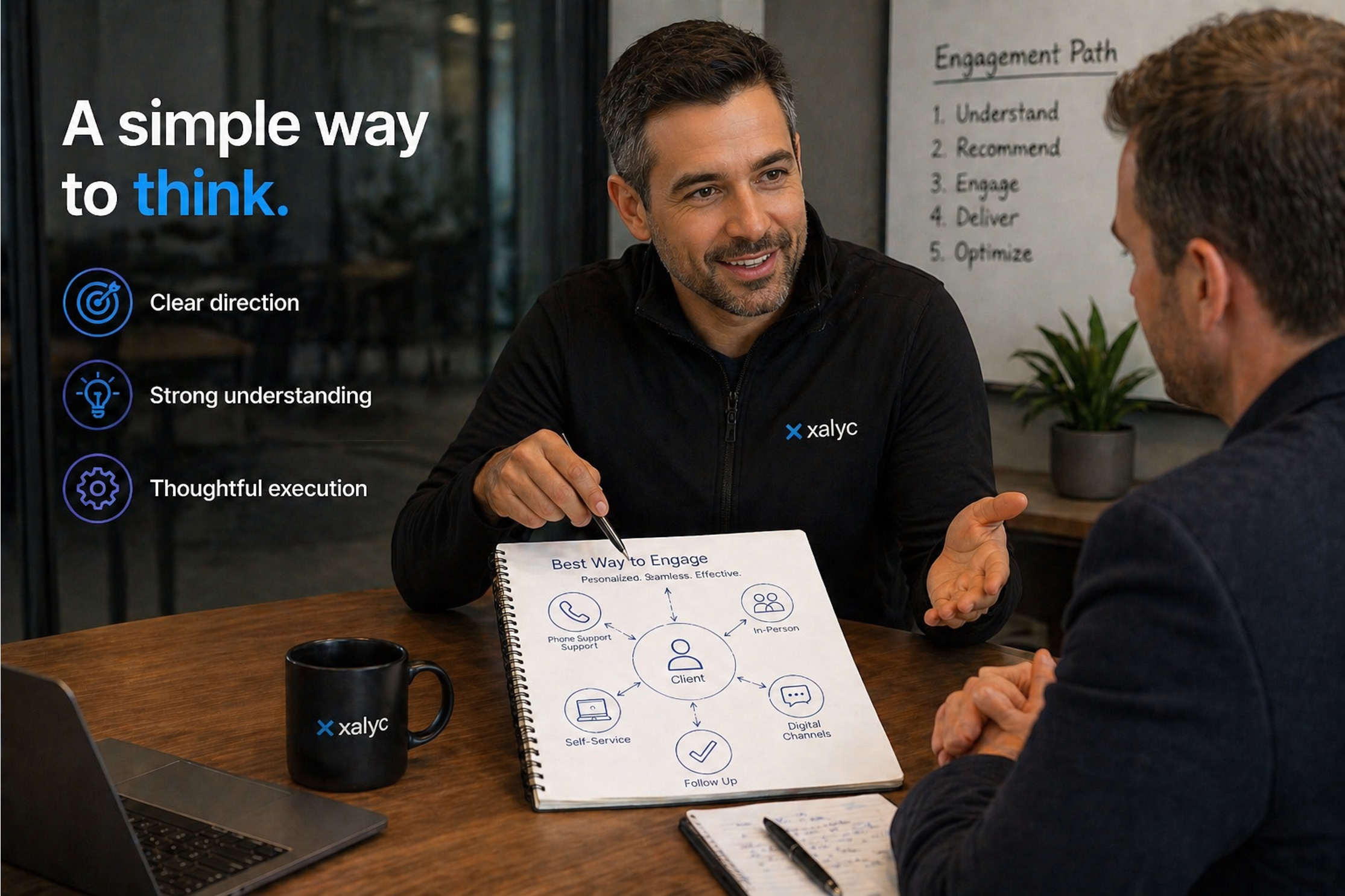
A simple way to think about it:
A great business, like a great film, needs a strong story.
The technology behind it can evolve, from how it’s produced, delivered, or experienced, but without a clear story, it won’t connect. AI and modern technologies are no different.
They don’t replace the need for:
- Clear direction
- Strong understanding of your clients
- Thoughtful execution
They simply help you move faster, work smarter, and scale what already works.
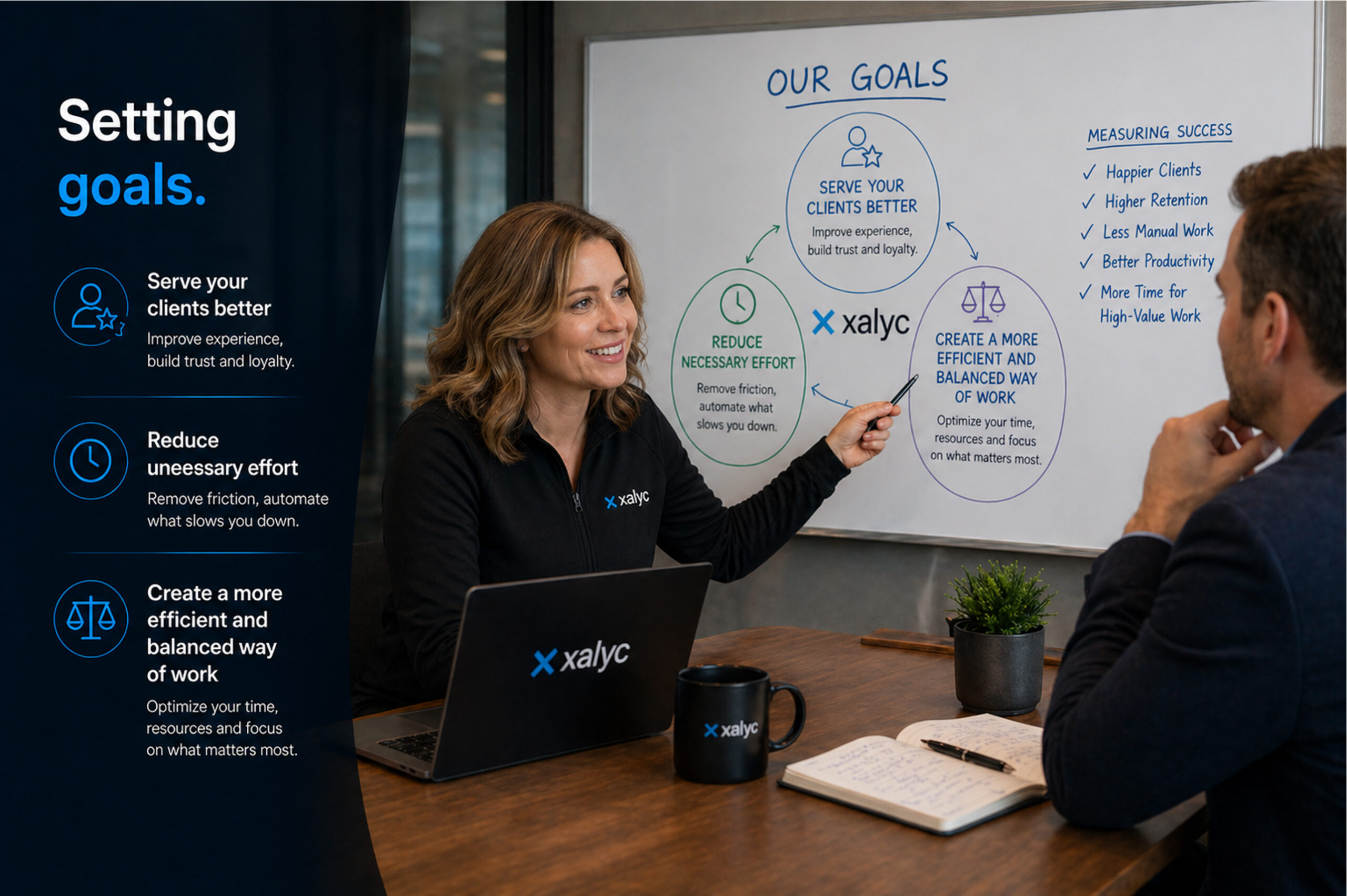
The goal is to use technology to support you not the other way around:
The goal is to:
- Serve your clients better
- Reduce unnecessary effort
- Create a more efficient and balanced way of working
AI and the technologies below help achieve that.
The key word is help. They do not replace your business. They strengthen it.
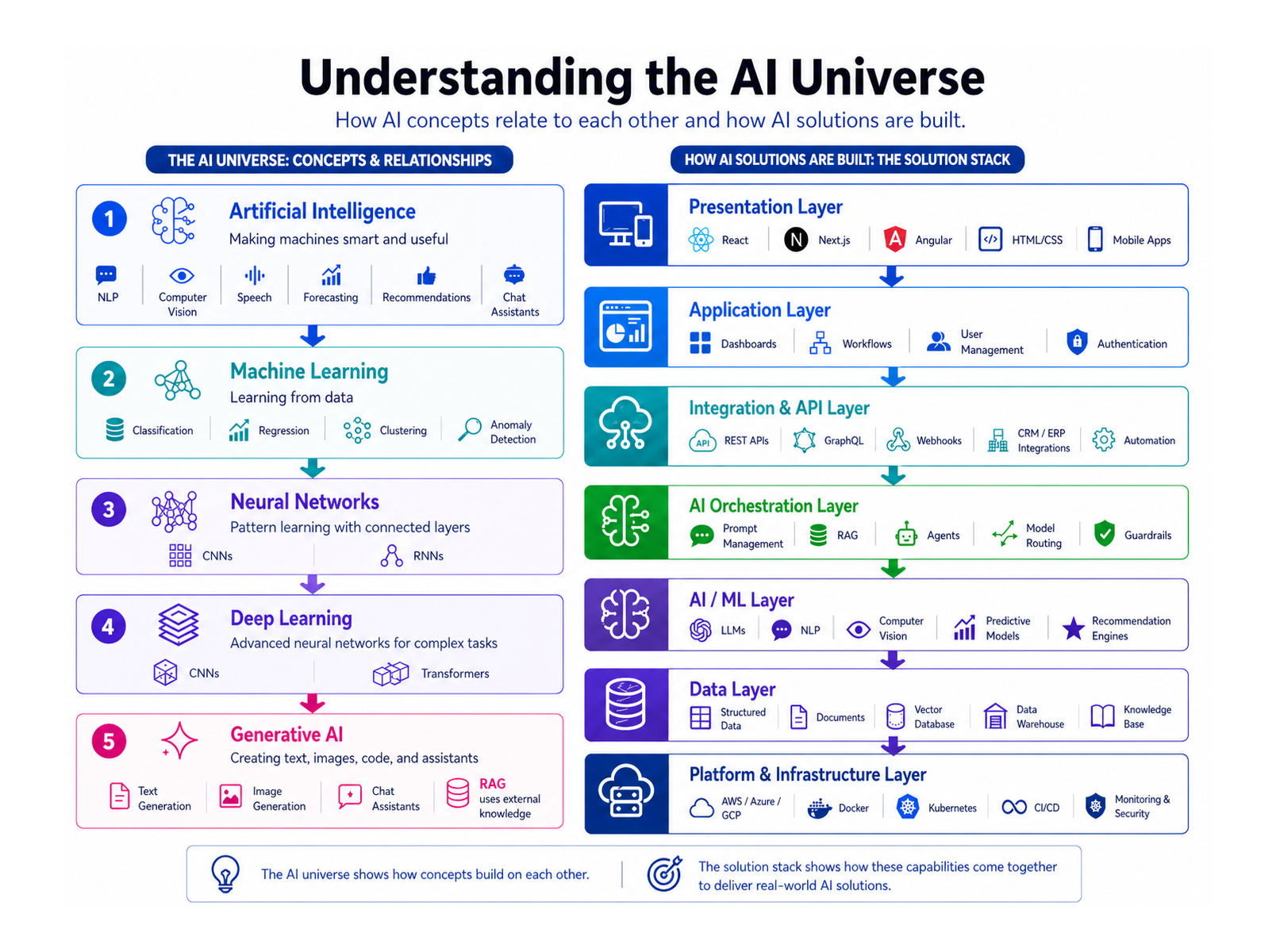

Machine Learning (ML)
Machine Learning is the engine of modern intelligence. It uses algorithms to analyze data, learn from it, and make predictions or decisions about trends, outcomes, future events, or business metrics. Instead of being explicitly programmed with fixed rules, ML models are “trained” using large amounts of data, allowing them to improve over time. This enables businesses to move from static, rule-based systems to dynamic models that continuously learn and adapt.
Xalyc Implementation: Built intelligent recommendation and decision support solutions that help users evaluate options, identify patterns, and make faster, more informed choices.

Deep Learning (DL)
A specialized subset of machine learning, Deep Learning is inspired by the structure and function of the human brain through artificial neural networks. These “deep” layers of interconnected nodes can process unstructured data like raw text, sound, and images at a level of sophistication previously impossible for standard ML. It is the technology behind the most advanced breakthroughs in the field, from self-driving cars to medical imaging diagnostics. For a company like Xalyc, DL represents the capability to handle high-dimensional, complex data problems that require nuanced understanding.
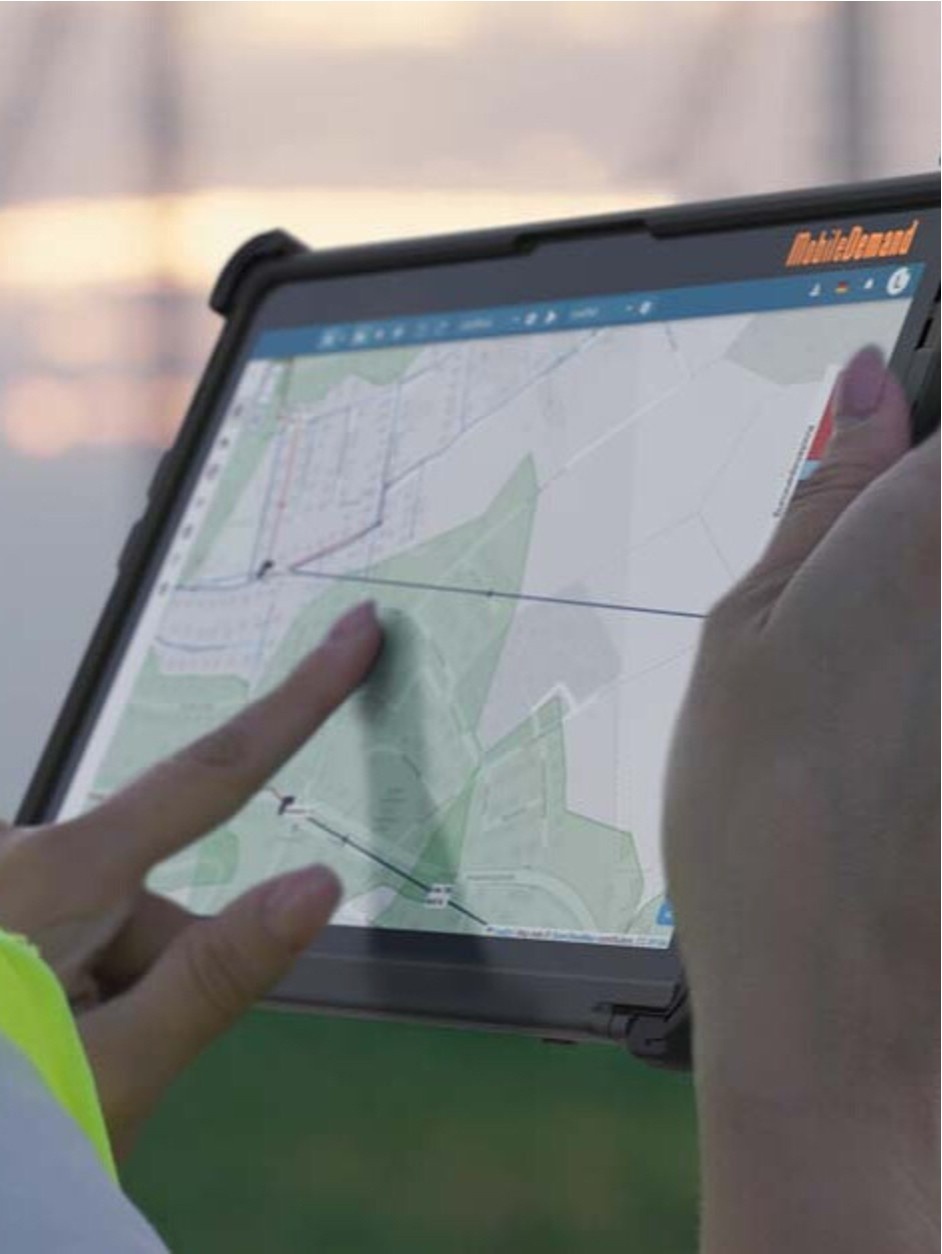
Xalyc Implementation: Developed advanced AI solutions for complex visual and spatial data analysis, supporting large scale planning, pattern recognition, and high volume data interpretation.

Generative AI
Generative AI is a transformative technology that goes beyond analyzing data to creating entirely new content. By learning patterns from large datasets, it can produce high-quality text, realistic images, synthetic audio, and even functional software code. Organizations use Generative AI to automate creative workflows, personalize marketing at scale, and accelerate research and development. For clients, this means higher productivity and faster time-to-market for digital assets.
Xalyc Implementation: Designed generative AI solutions that create text based outputs, automate content generation, and improve productivity across business workflows.

LLMs & VLMs:
Large Language Models (LLMs) and Vision-Language Models (VLMs) are the “brains” behind modern conversational and multimodal AI applications. LLMs are trained on vast amounts of text to understand and generate human-like language, while VLMs combine visual and language understanding, allowing AI systems to interpret and describe images or videos. These models enable advanced reasoning, summarization, and complex problem-solving across multiple data types, making them essential for building applications that require deep contextual understanding and human-like interaction.
Xalyc Implementation: Built conversational and multimodal AI solutions that can understand language, interpret images, generate responses, and support richer human like interactions.

AI-Powered Automation
AI-Powered Automation applies artificial intelligence to streamline and optimize business processes that were previously manual or inefficient. By embedding intelligence directly into workflows, organizations can automate end-to-end tasks such as invoice processing, document verification, customer support, and supply chain management with minimal human intervention. Unlike traditional automation, AI-powered systems can handle exceptions and make logic-based decisions on the fly, resulting in lower operational costs, fewer errors, and faster overall business operations.
Xalyc Implementation: Implemented AI driven workflow automation solutions for business operations such as finance, document handling, and process execution, reducing manual effort and improving speed.
Natural Language Processing (NLP)
Natural Language Processing (NLP) is the branch of AI that focuses on enabling computers to understand, interpret, and generate human language in a meaningful way. NLP applications include sentiment analysis to gauge customer satisfaction, automated translation, chatbots, and extraction of key information from complex documents such as legal or medical records. By leveraging NLP, Xalyc helps businesses unlock valuable insights hidden in unstructured text data and improves communication and decision-making across the organization.
Xalyc Implementation: Delivered language driven AI solutions for text understanding, information extraction, classification, and insight generation from unstructured business data.

Computer Vision
Computer Vision enables machines to interpret and analyze visual data from images, videos, and other sources, allowing them to make decisions or provide actionable insights. It powers applications such as facial recognition, object detection in manufacturing, autonomous navigation, and quality control. This also includes Optical Character Recognition (OCR) for automatically extracting text from scanned documents, invoices, forms, and other visual content. In a business context, Computer Vision helps organizations automate visual inspection, enhance security, and extract valuable insights from high volumes of visual information.
Xalyc Implementation: Built visual intelligence solutions that analyze images, scanned documents, and spatial data to support inspection, recognition, monitoring, and text extraction use cases.

Smart Chatbots and Virtual Assistants
Smart Chatbots & Virtual Assistants: Moving far beyond the “if-this-then-that” bots of the past, these agents leverage NLP and Generative AI to engage in fluid, context-aware conversations. They provide 24/7 customer support, assist with complex navigation tasks, and can even act as internal productivity tools for employees. These assistants learn from every interaction, becoming more helpful and accurate over time, which enhances the overall user experience. They are the frontline of modern customer engagement, offering a scalable way to deliver personalized service.
Xalyc Implementation: Developed intelligent virtual assistants and conversational interfaces that support customer interactions, answer questions, guide workflows, and improve service availability.

Predictive Analytics
Predictive Analytics uses historical data, statistical modeling, and machine learning techniques to identify patterns and forecast future outcomes. By analyzing past trends, businesses can proactively detect risks and opportunities—such as forecasting sales, predicting equipment failures, or identifying customers likely to churn. This approach shifts organizations from reactive to proactive decision-making, enabling data-backed strategic planning and a competitive edge through foresight.
Xalyc Implementation: Created predictive models and analytics solutions that help organizations forecast trends, identify risks, and make proactive business decisions.

Data Analytics Applications
Data Analytics Applications are custom-built software solutions and dashboards that transform complex data into actionable business intelligence. They provide user-friendly interfaces for stakeholders to explore data, visualize key performance indicators (KPIs), and perform in-depth analyses. Beyond raw numbers, these applications tell “the story” behind the data, highlighting trends, anomalies, and insights that require attention. They serve as the bridge between advanced data science and practical, day-to-day business decision-making.
Xalyc Implementation: Built analytics platforms and dashboard driven applications that turn large volumes of data into meaningful business insights, KPI visibility, and decision support.
Not sure whether to augment, build, or deploy?
Let’s talk through the right path.