We Never Sell Your Data
Your data belongs to you. Xalyc does not sell, rent, or trade personal or business information to any third party — ever. Full stop.

Nullam dignissim, ante scelerisque the is euismod fermentum odio sem semper the is erat, a feugiat leo urna eget eros. Duis Aenean a imperdiet risus.
When you work with Xalyc, you’re trusting us with data that matters. Here’s exactly how we treat that trust — in plain language, no legal jargon required.
Your data belongs to you. Xalyc does not sell, rent, or trade personal or business information to any third party — ever. Full stop.
We gather only the information necessary to deliver our services. Data is used for its stated purpose and nothing else — no upselling, no profiling.
All data is encrypted in transit and at rest. Access is strictly controlled, with security practices aligned to NIST CSF 2.0 and SOC 2 standards.
You have the right to access, correct, or delete your personal data at any time. We honor these rights regardless of where your business is located.
Data you share for AI development or testing is used only within your engagement — never repurposed, never shared with other clients, never sent to third-party AI platforms without your written consent.
Data is retained only as long as required to deliver your service or meet legal obligations — then it’s securely deleted or returned to you on request.
Want the full details?
Our complete Privacy Policy is available upon request — written in plain language.

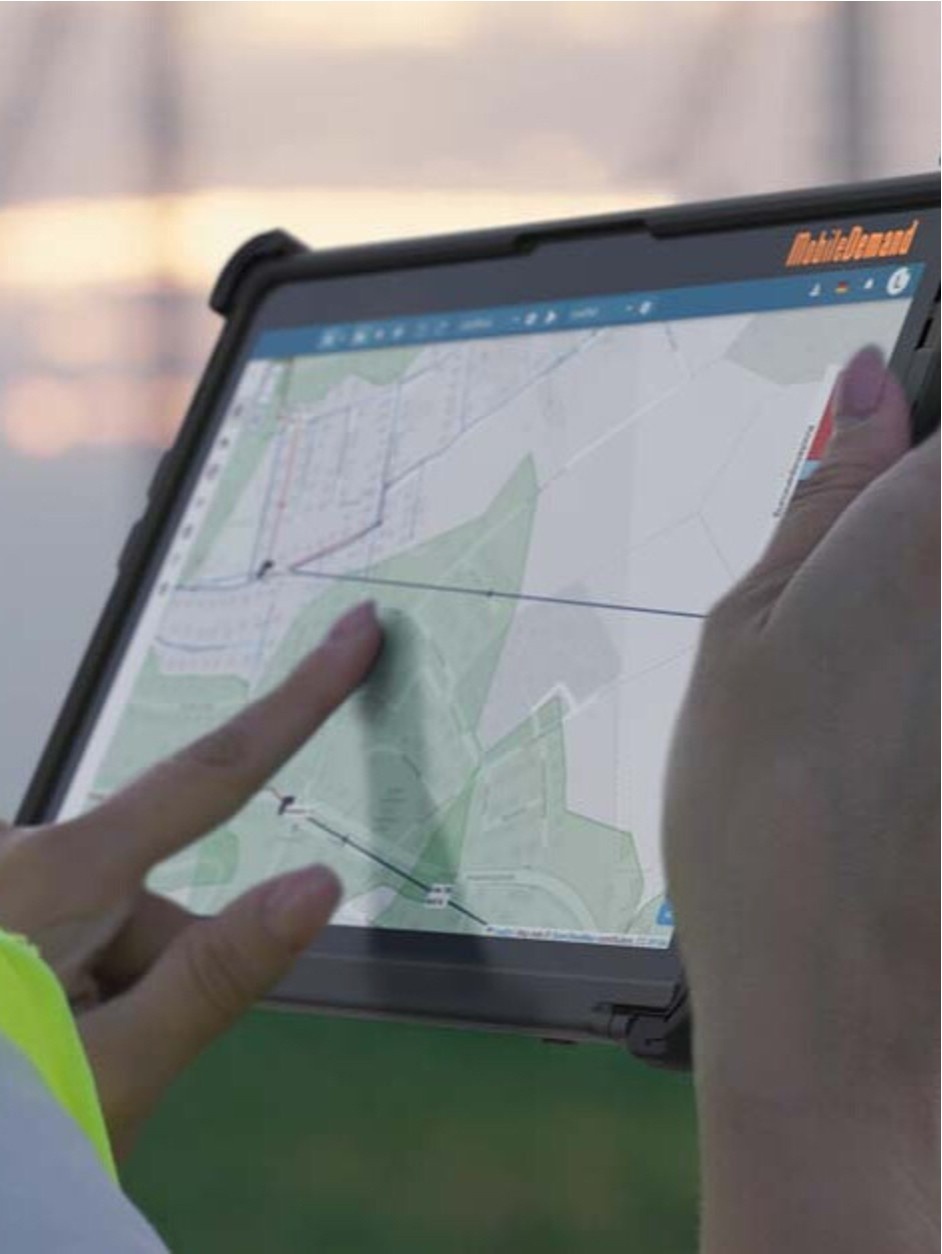



Data Analytics Applications are custom-built software solutions and dashboards that transform complex data into actionable business intelligence. They provide user-friendly interfaces for stakeholders to explore data, visualize key performance indicators (KPIs), and perform in-depth analyses. Beyond raw numbers, these applications tell “the story” behind the data, highlighting trends, anomalies, and insights that require attention. They serve as the bridge between advanced data science and practical, day-to-day business decision-making.
Examples: Amazon QuickSight (AWS), Power BI (Azure), Looker (Google)

Predictive Analytics: Predictive Analytics uses historical data, statistical modeling, and machine learning techniques to identify patterns and forecast future outcomes. By analyzing past trends, businesses can proactively detect risks and opportunities—such as forecasting sales, predicting equipment failures, or identifying customers likely to churn. This approach shifts organizations from reactive to proactive decision-making, enabling data-backed strategic planning and a competitive edge through foresight.
Examples: Amazon Forecast (AWS), Azure Machine Learning, Google Cloud AI Platform

Smart Chatbots & Virtual Assistants: Moving far beyond the “if-this-then-that” bots of the past, these agents leverage NLP and Generative AI to engage in fluid, context-aware conversations. They provide 24/7 customer support, assist with complex navigation tasks, and can even act as internal productivity tools for employees. These assistants learn from every interaction, becoming more helpful and accurate over time, which enhances the overall user experience. They are the frontline of modern customer engagement, offering a scalable way to deliver personalized service.
Examples: Amazon Lex (AWS), Azure Bot Services, Google Dialogflow

Computer Vision enables machines to interpret and analyze visual data from images, videos, and other sources, allowing them to make decisions or provide actionable insights. It powers applications such as facial recognition, object detection in manufacturing, autonomous navigation, and quality control. This also includes Optical Character Recognition (OCR) for automatically extracting text from scanned documents, invoices, forms, and other visual content. In a business context, Computer Vision helps organizations automate visual inspection, enhance security, and extract valuable insights from high volumes of visual information.
Examples: AWS Rekognition, Azure Computer Vision, Google Cloud Vision AI
Natural Language Processing (NLP) is the branch of AI that focuses on enabling computers to understand, interpret, and generate human language in a meaningful way. NLP applications include sentiment analysis to gauge customer satisfaction, automated translation, chatbots, and extraction of key information from complex documents such as legal or medical records. By leveraging NLP, Xalyc helps businesses unlock valuable insights hidden in unstructured text data and improves communication and decision-making across the organization.
Examples: AWS Comprehend, Azure Cognitive Services (Text Analytics), Google Cloud Natural Language API

AI-Powered Automation applies artificial intelligence to streamline and optimize business processes that were previously manual or inefficient. By embedding intelligence directly into workflows, organizations can automate end-to-end tasks such as invoice processing, document verification, customer support, and supply chain management with minimal human intervention. Unlike traditional automation, AI-powered systems can handle exceptions and make logic-based decisions on the fly, resulting in lower operational costs, fewer errors, and faster overall business operations.
Examples: UiPath, Microsoft Power Automate, Automation Anywhere

Large Language Models (LLMs) and Vision-Language Models (VLMs) are the “brains” behind modern conversational and multimodal AI applications. LLMs are trained on vast amounts of text to understand and generate human-like language, while VLMs combine visual and language understanding, allowing AI systems to interpret and describe images or videos. These models enable advanced reasoning, summarization, and complex problem-solving across multiple data types, making them essential for building applications that require deep contextual understanding and human-like interaction.
Examples: LLM: OpenAI GPT-4, Anthropic Claude and VLM: OpenAI GPT-4o, Google Gemini Vision
Generative AI is a transformative technology that goes beyond analyzing data to creating entirely new content. By learning patterns from large datasets, it can produce high-quality text, realistic images, synthetic audio, and even functional software code. Organizations use Generative AI to automate creative workflows, personalize marketing at scale, and accelerate research and development. For clients, this means higher productivity and faster time-to-market for digital assets.
Examples: OpenAI (ChatGPT), Anthropic Claude, Google Gemini

A specialized subset of machine learning, Deep Learning is inspired by the structure and function of the human brain through artificial neural networks. These “deep” layers of interconnected nodes can process unstructured data like raw text, sound, and images at a level of sophistication previously impossible for standard ML. It is the technology behind the most advanced breakthroughs in the field, from self-driving cars to medical imaging diagnostics. For a company like Xalyc, DL represents the capability to handle high-dimensional, complex data problems that require nuanced understanding.
Examples: PyTorch, TensorFlow
Machine Learning is the engine of modern intelligence. It uses algorithms to analyze data, learn from it, and make predictions or decisions about trends, outcomes, future events, or business metrics. Instead of being explicitly programmed with fixed rules, ML models are “trained” using large amounts of data, allowing them to improve over time. This enables businesses to move from static, rule-based systems to dynamic models that continuously learn and adapt.
Examples: Amazon SageMaker (AWS), Microsoft Azure Machine Learning, Google Vertex AI, scikit-learn
